Where girls do not have one, they use rags, leaves, or nothing at all, and most choose to stay home rather than manage their
period in a classroom without the basic materials. A girl may miss several days of school every month, and the days add up. By the
end of a term, she has fallen behind her classmates. By the end of the year, the gap may be too large for her to close. In some
cases, the decision to keep her home during her period becomes a decision to keep her home altogether. Sanitary towel distribution
is one of the most direct ways to keep a girl in school during the years when dropout rates rise.
We distribute sanitary towels to girls in the schools where we work. The distribution is on a regular and predictable schedule, so
that no girl is left without supplies from one month to the next. A girl who does not know whether she will have a towel next
month is a girl who cannot plan, and a girl who cannot plan is a girl who may miss school anyway out of uncertainty. The
consistency of the distribution is what makes it useful. A towel that arrives once and is not replaced is not a solution. A towel
that is provided every month, and that the girl can count on, is.
The purpose of sanitary towel distribution is that a girl's period does not decide whether she is in class. A girl who has what
she needs to manage her period at school is a girl who attends more consistently, who falls behind less often, and who is less
likely to drop out during the years when the risk is highest. The distribution is one of the most direct ways that we work to keep
girls in school, and it is one of the reasons that girls in the schools where we work are staying in class through the months that
would otherwise have taken them out.
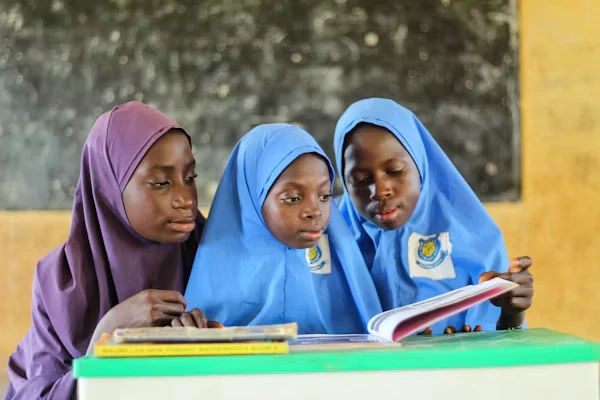
Sanitary towel distribution keeps a girl in school during her period, so that the days she would have missed do not become the
reason she drops out.